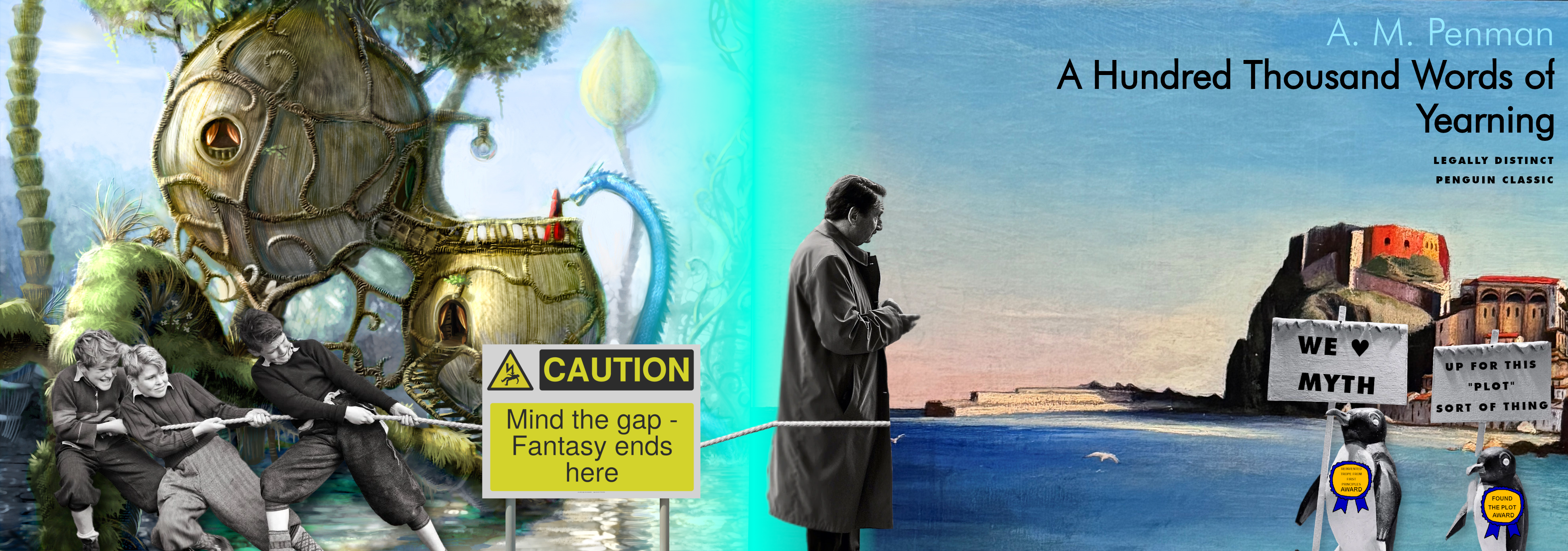
- 1. Keeping it Real: Table stakes;
- 2. Beginning Borrowing: Literary writers like borrowing from genre – someone ought to ask what we should borrow back;
- 3. A Village After Dark: Litfic creates contexts where problems cannot be cleanly resolved;
- 3.5 Derailed (or, ‘Easter is Harvest time for the University’): Making up for the seminar that wasn’t;
- 4. Much Ado About Borrowing: Thinking of a philosophy for how to borrow
1. Keeping it Real (permalink)
Look, I’ll be honest: as much as I intend to teach the act of borrowing to my students, I haven’t much planned. Out of all the workshops, this is the one where I feel like I’m most like a student. Borrowing from litfic, and other genres? Like, all of them? A big ask. I’m not a picky reader, but I decided that fantasy was going to be my wheelhouse, which means I feel somewhat confident in making arguments about what fantasy writing is, and isn’t.
I get one hour to give my students concepts and techniques that might help them to steer their craft. I can’t pretend to cram in an entire semester’s worth of learning in that time. Likewise, when I post my writeups here, and on BlueSky, and Mastodon, you will no doubt find something missing. Perhaps there’s something you learned from a writing workshop (run by a more experienced author) that just doesn’t show up in my writing. When my words impassion someone enough jump into a quote reply, to say, ‘There’s something you’ve missed,’ or even, ‘You know fuck all about writing, I’m going to finesse you,’ that’ll be an exciting day for me.
2. Beginning Borrowing (permalink)
I started this series of workshops with a leading topic that I hoped would define the identity of my group of students:
https://brologue.net/2026/02/26/factfinding-workshop/
But my question of “borrowing” starts with someone else’s definition of fantasy, someone who I’ve talked about on Brologue before: my mum. Mum seems to balk at the whole gamut of tropes – magic, wizards, quests, dragons; if the stakes aren’t real, she’s not interested. She tried watching Game of Thrones with Dad, back in the day, and stopped when the dragons turned up. She pulled up Google to double check that they weren’t real. However, on several occasions, we have sat down to watch TV series that are fantasy from concentrate (no unreal bits): Outlander, The Handmaid’s Tale, and – keeping the fantasy umbrella so open as to turn it inside out – Bridgerton.
Then there are films that seem realistic at a glance, but fall into the fantastical anyway – and she still enjoys it. Ordinary Angels is a film, ‘based on a true story,’ about Sharon Stevens, an alcoholic who goes above and beyond to help a father and his sick daughter, after finding their story in a newspaper. It climaxes when, after a series of extraordinary acts of kindness and fundraising, she co-ordinates an entire escort mission to fly the daughter out for life-saving surgery during a blizzard – a real Old Testament sneeze.
Me and Mum both have similar ideas of what ‘based on a true story’ means. Mine is: “such events did transpire, but the writers have re-arranged them as a plot, and dramatised some events to give us a story.” She, however, was more willing to suspend her disbelief where I was not. The plot, and the story that congeals around it, is dedicated to typecasting Sharon Stevens as an angel (the allegory isn’t hard to miss when it’s in the title of the film). The lengths she goes towards helping this family transcend realism and verge on the fantastical, dare I say miraculous; powerful corporate obstacles that shrug off even the most persistent activist groups buckle under this woman’s plights. Am I seriously expected to believe a healthcare CEO wiped a father’s debts because a white woman gave him a really convincing story? Even Dickens would find it a farce.
All this to say, in Mum’s words: “Cheesy movie.” An all-American, individually-wrapped slice of emulsified cheddar (mostly oil). The exact sort of film you find on Channel 5 at 3pm.
Mum is my model reader for whom fantasy needs to be smuggled in through fancy dress. A task of informed naïvety, I think: what I want to write is unlikely to win her over, and yet I feel it’s my mission to learn from other genres. I am not a literary writer, but I have read writers whose sci-fi and fantasy work have been described as ‘literary,’ and I think it might be worth exploring what we can borrow from litfic. So:
Q: If litfic writers borrow from genres, what sorts of techniques can we learn from literary fiction that we might otherwise overlook? What can we borrow back?
It’s not exactly a dirty secret that litfic writers like to borrow tropes from the genre toybox. They’re allowed to. Imagine if we fantasy writers weren’t allowed to turn our enemies into lovers! Romance’s bread and butter, that is:
https://tvtropes.org/pmwiki/pmwiki.php/Main/OppositesAttract
I asked about ‘borrowing back’ of Francis Spufford last month, who was on tour with his latest genre-bending work, Nonesuch.2 He didn’t wholly agree with my framing – after all, if fantasy is only just starting to become mainstream, it is litfic writers who have much to learn from fantasy, and I’m implying there’s some sort of equivalent exchange going on. Lest I forget Terry Pratchett’s iconic answer to critics who avoid fantasy as a “ghettoized genre:”
https://www.goodreads.com/quotes/9654148-o-you-re-quite-a-writer-you-ve-a-gift-for-language
I should’ve given him more context (but this being a book signing, everyone’s strapped for time). My email was the next best thing.
As someone who intends to write fantasy, I can’t afford to be picky about what I read. They say 90% of everything is crap, and, well, I’ve got to see it to believe it. This week3, I’ve asked my students to seek out a book that is not a work of fantasy, and come to class prepared to talk about it. I’m taking part as well, of course, having picked out a short story, as well as some notes on what I think the writer does that I’d like to see more of. Everyone will get to talk about their book of choice, then we’ll swap notes and try writing a little flash fiction in the genre. It’s a spin on an activity I created with my cohorts for our student-lead seminar last year4.
3. A Village After Dark (permalink)
My MFA cohort doesn’t lack in writers with a literary streak. What they have all taught me about literary fiction is that (if you’ll pretend it’s a genre, for a moment) the writer often builds a context where character conflicts cannot be cleanly resolved. By ‘character conflicts,’ I mean both a character’s traits that are in discord with each other, as well as problems between characters.
I flicked through my copy of Norton and settled on a short story to set as an example: Kaguo Ishiguro’s A Village After Dark:
https://xpressenglish.com/our-stories/village-after-dark/
Here we have Fletcher, a man lost, but not afraid, who stumbles through an English village and invites us to see the world as he sees it. He tries a door and, as it happens, one of the younger generation recognises him. She says the older folks told her all about Fletcher’s influence in those days. This house he’s trying? It’s the Petersons – old ghosts. They’ll remember him.
Fletcher doesn’t tell us much, directly, about who he is. We have to infer what sort of character he was in the past from the people who he meets, and who he defends himself against. That is, until the woman (Mrs. Peterson? Fletcher never clarifies) tells Fletcher that he ruined her life. Thus does the persona we were introduced to – of an ambling, well-adjusted old man – take a curmudgeonly turn. He tries to change topics, deflect blame, downplays what he believed to have happened. When people do a bit of DARVO in real life, it is to try and make themselves look better in public to dampen consequences:
https://en.wikipedia.org/wiki/DARVO
If these are victims, then their voices have hardly been silenced. Fletcher is denied the upper hand in the argument. I find the bumbling, forgetful persona incredulous, once I read that “you ruined my life.” And yet, at the same time, I don’t get the feeling that Fletcher is an out-and-out monster. This is like clicking through to a Twitter or Bluesky argument, several quotes or replies deep – I’m a subject of context collapse, and I want to scroll up to understand the context, but I am not treated to it here.
I think Ishiguro establishes a ‘looking-for’ (h/t D. S. Black). That is, he identified the one thing Fletcher would be unconsciously seeking after he gets get what he wants – something that can never be pursued, only encountered. How much does Fletcher want forgiveness, if he truly believes all is in the past, and he has changed as a person? No, what he wanted from the village was a sense of direction, a place to rest, and he gets both of these things. He also gets a secret, third thing (people from his past telling him how much he sucks). Forgiveness is what he was looking for. That, he is not entitled to. Forgiveness is part of the contextual residue that cannot be cleanly wiped from the story’s slate. The conflicts resolve after a fashion.
I’m not saying that emotional depth like this isn’t exclusively possessed by literary fiction. It’s just that fantasy as a genre has always tended to draw clear boundaries between good and evil (and not just because ‘Tolkien did it’). Literary fiction’s adherence to realism, I think, is something that helps complexities into focus. If you’re a lover of fantasy, regardless of the subgenre, I think it’s worth reading the odd litfic every so often – yes, even those ones where a hundred thousand words go by without the plot advancing much.
3.5 Derailed (or, ‘Easter is Harvest time for the University’) (permalink)
Here comes the part where I would’ve shared some of the insights my students and I shared. Just one problem: it’s that time of year in the academic calendar where undergrads frantically reap what they have sown over the past year. Easter is harvest time for the colony organism known as ‘St. Andrews University,’ and all the knowledge it has dispensed must be returned in the form of coursework. What I’m saying is, there wasn’t much of a seminar. The undergrads have more important priorities to attend to.
With little discussion from the students to keep this post going, I’m going to have to do a bit of fudging. So, I asked Cl*ude…
…lol. lmao, even. No, I looked up #writerscoffeeclub on Bluesky, and Mastodon, to find some answers to the question asked on the 13th of April: “What do you borrow from other fiction (or nonfiction) genres?”
(I don’t want to derail my post with myriad interesting tangents, so I will have to keep this brief…)
Charlie Stross quotes fellow Scottish sci-fi author, Ken MacLeod – “history is the secret weapon of the science fiction writer:”
https://wandering.shop/@cstross/116397683694325760
History’s much more than a few great men, and finding these untapped characters in history books isn’t exactly hard. I very briefly touched on this in the worldbuilding workshop. St. Andrews’ Main Library is in no short supply of history books.
Let me extend that metaphor, turn it into a conceit: is history a singular secret weapon? Why not an entire armoury of weapons practical (or otherwise)? For example, what sort of weapon would the Public Domain Review be?
https://publicdomainreview.org
This is a journal “dedicated to the exploration of curious and compelling works from the history of art, literature, and ideas.” Here we have a resource that makes the old new again, and should surprise you in doing so.
The public domain being the great majority of human artistic endeavour5, it is difficult to mentally grasp just how much work is in it without it all collapsing in a heap of old dust. Someone had to curate all the stuff that gets left in History’s footnotes:
https://www.vice.com/en/article/the-public-domain-interview-adam-green/
We tend to go for stuff that’s less well-known, so rather than put up all the works of Charles Dickens, we’ll go for something toward the more unorthodox end of the cultural spectrum instead. [..] It’s a sort of alternative history to the mainstream narrative, an attempt to showcase just some of the excellence and strangeness of human ideas and activity that exist “in between” these bigger events and works that seem to have woven the narrative of history.
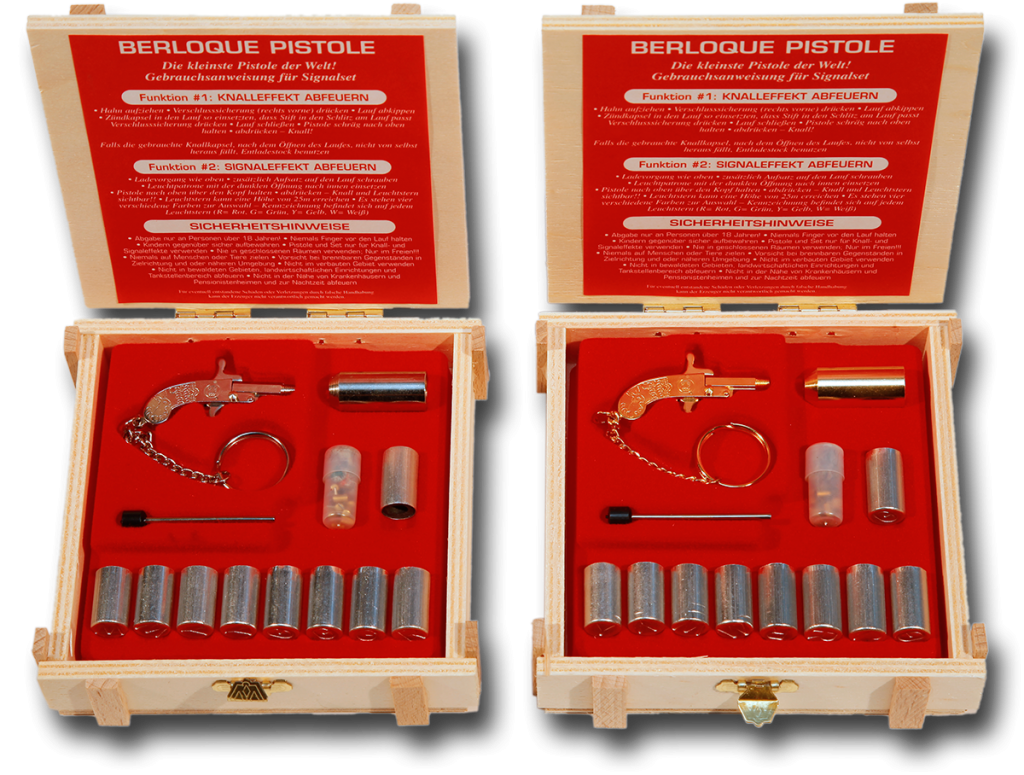
It is a novelty that consistently grabs my attention – like a tiny flare gun:
https://www.berloque.com/wp-content/uploads/2018/04/B-KistenV2-1024×775.png
But I’m digressing a little – what about genres? E. H. Lupton answered:
https://indieauthors.social/@pretensesoup/116397147927455053
I play with horror tropes sometimes. [..] I borrow a fair amount of technique from poetry too.
Now we’re talking. Horror and fantasy overlap very easily, though we tend to defang borrowed tropes if our intention isn’t to scare. Few of Terry Pratchett’s vampires move to scare, for example. Monsters of tradition haven’t been scary in a long time (depending on who you ask… they’re kind of hot???6). When I want my fantasy to be scary, I’d like the monster to be a bit more abstract. Like the Backrooms.

Turns out, the labyrinth as a monster can be as terrifying as the monster in a labyrinth. Would you like to be the victim of a segmentation fault in the Universe?
The grotesque and the uncanny don’t have to be bound to horror, either. Tell me your cosy fantasy doesn’t have room for a few bugs and fungi. Tell me you don’t think it’s possible to write fan fiction of Kafka’s Metamorphosis where Gregor Samsa finally catches a break.
…OK. This isn’t getting me far. I’m starting to feel like the narrator from The Stanley Parable:
https://www.youtube.com/watch?v=xntIXgmRj5I
I borrow, like any artist, but am not all that confident in borrowing from other genres to the point where I can point to a given genre and teach how to borrow from it. It’d be more productive, I think, to end on a more general note (rather than trying to silo this post into umpteen different headings for each and every conceivable genre and subgenre).
4. Much Ado About Borrowing (permalink)
I borrow, you borrow, he-she-me, borrow. Everyone’s borrowing from everyone else, all the time, and we know what to borrow – and yet it seems that words slip through our fingers when we try to articulate the how of it. It behooves me, then, to articulate a part of the creative process that is as intuitive as automatic breathing. Fine. I accept the risks involved. I hope that what follows is some genuine insight for you. Do tell me if I sound like I huff my own farts.
Borrowing is literally tangential. I sit down to read a book, or watch a TV show, but I’ve never sat down to borrow. Just doesn’t feel right. If I think about borrowing anything, then the actions I take are a digression from the media I engage with. Occasionally, borrowing begins as an analysis, where I sit down and write out what I find interesting about a book, a character, or a concept.
Occasionally.
Far more often, borrowing stems from a memetic impulse. Perhaps you, like me, have encountered Cormac McCarthy’s Blood Meridian after innumerous people have recommended it to each other by way of social media algorithms7. Perhaps you, like me, have yet to read it, but you’ve heard all about this Judge Holden character.
Whatever in creation exists without my knowledge exists without my consent.
Blood Meridian, Chapter XIV, p. 207
The man’s got aura. And you, like me, have heard, in fragments, the many interpretations of what Holden stands for. He is a force of nature, a philosopher king, Satan, he’s in the Epstein files, etc., etc.. You may pick up Blood Meridian, you may not – regardless, you have encountered Judge Holden, and now you want a big bad just like him. Not literally exactly him, but someone who’s a big enough threat that when they say shit like this:
It makes no difference what men think of war, said the judge. War endures. As well ask men what they think of stone.
Blood Meridian, Chapter XVII, p. 259
Characters listen. Change against their will.
Your savvy readers might catch on that “Sir Holdem” is a remix of the Judge Holden myth. “Sir Holdem” looks a little older, frailer, and he’s forgotten who he was in a past life, but a lesser god in this world has identified him as an eldritch intruder. You’re allowed to borrow the timeless juxtaposition betwixt play and conquest, in order to characterise him. Judge Holden does.
Men are born for games. Nothing else. Every child knows that play is nobler than work. [..] War is the ultimate game because war is at last a forcing of the unity of existence. War is god.
Blood Meridian, Chapter XVII, p. 261
As I asked in the characterisation workshop: what is your version going to say and do differently; what places shall he go, where his memetic doppels daren’t tread? What does this meme say – this meme, and not some other meme?
What I’ve tried to do in these workshops is to ask challenging questions and give you techniques to turn your thinking around. To detach from the figure and see the background, as it were.
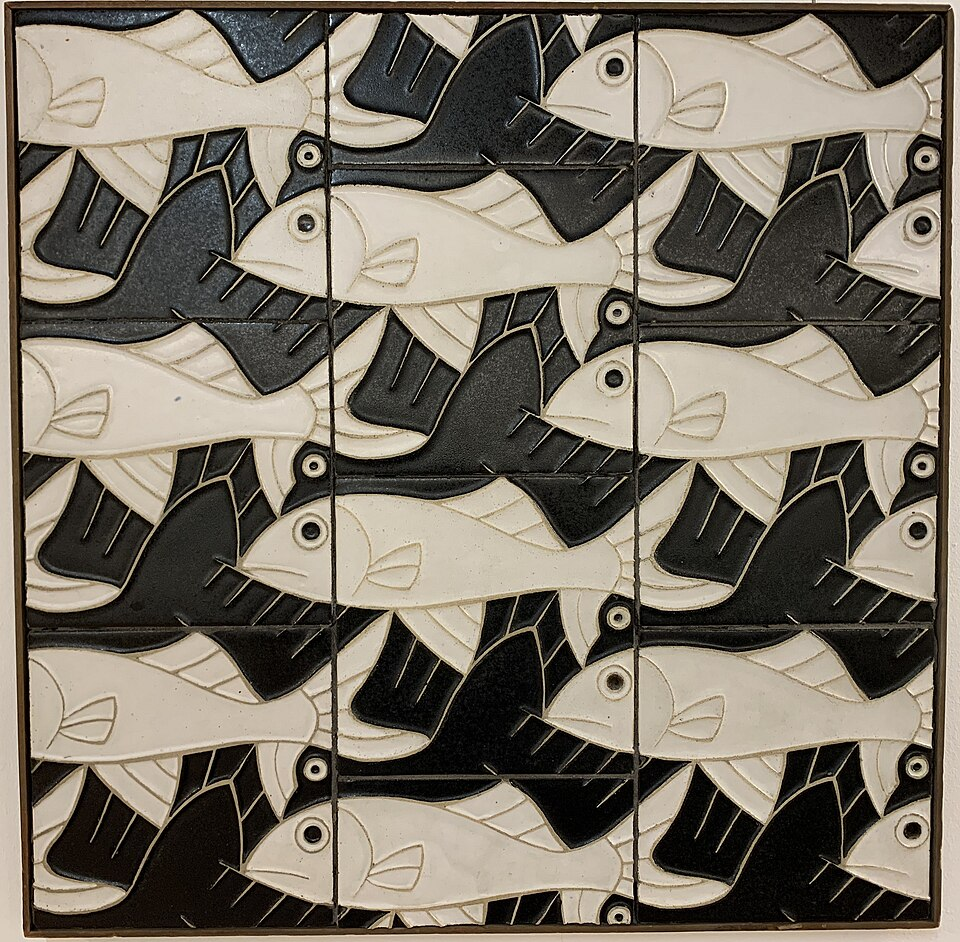
I cannot give you the boon of Olympus that turns you into an eternal wordsmith. I am only human. My advice for honing your borrowing skills is close reading (which, if you’re an English undergrad, you already do) and spending time researching what other people have to say about the text. Lame, I know. Artists make borrowing sound so easy, with their “everything is a remix” patter.
There is, however, something I can give you that might help direct your borrowing. Back in the 1970s, Brian Eno8 wrote over a hundred gnomic suggestions on the back of index cards to create the first “Oblique Strategies” deck:
https://stoney.sb.org/eno/oblique.html
What did you get? I got “Do something boring.”
This kicks our lateral thinking into gear. By ‘something boring,’ does it mean I should write something conventional? Should I get up from my desk, right now, and look for some boring task (easier said than done)? If I was writing my thesis, am I being asked to write my characters doing something boring? And how should I interpret this for borrowing, for it is an intrinsically interesting activity? Maybe it’s telling me to just steal Judge Holden wholesale – don’t sweat it, there’ll be time for future revisions. Do I pick up Blood Meridian, and write out Holden’s dialogues, to try and empathise with McCarthy’s decisions – the drafts, the edits, the revisions?
As you can see, because there’s no one way to interpret the cards, they prompt you towards a set of future actions you could take. So, if you, like me, know the what, because you have hyperfixated on that first memetic impulse, Oblique Strategies proffer the how.
Odd as this workshop was, my next and final post in ‘”The…” Fantasy, As Yet Untitled’ series is going to get weird with it. Weirder than this. If a fireball explodes above a forest, and no-one’s around to cast it… did a wizard do it?
Can fantasy be weird and eerie? Or are our stories all doomed to be ontologically whimsy, no matter what we write?
- Full resolution:
https://brologue.net/wp-content/uploads/2026/04/workshop5.png
Fantasy landscape: David Revoy, CC-BY 4.0
Budapest seaside: dguendel, CC-BY-SA 4.0
“Columbo:” Thomas8047, CC-BY 4.0 ↩︎ - Set during the Blitz. There’s magic, time travel, and Nazis, and I shan’t say anything else… ↩︎
- i.e. The week beginning April 6th, before the Easter break. I am a little behind schedule… ↩︎
- In which we set out a collection of postcards on one table, and ‘serious topics’ on another, and asked people to come up and select one of each. My two were The Murder of Archbishop Sharpe, by John Opie, and ‘vegetarianism.’ I ended up writing some flash fiction about the murder of a Big Meat CEO by pickaxe, and the conspiracy theories surrounding it. ↩︎
- As well as works from non-human creators, i.e. animals and generative AI. Copyright’s reserved for humans only. ↩︎
- I’m not saying this. But the monsterfuckers out there… look it up yourself. ↩︎
- And if you haven’t – well, you have now. Won’t you get yourself caught up, and pass it on? ↩︎
- Musician, artist, cybernetics enthusiast, self-described weirdo; worked as a composer for the game Spore, designing a generative music system. The man is no stranger to generative art, but make no mistake – he is on the record for hating diffusion/large language models:
https://www.youtube.com/watch?v=LneiTaz2QoM ↩︎
TTLY… (permalink)
- sorry nothing